Key Takeaways
- Autonomous growth requires a shift from manual process management to high-performance Product Engineering that prioritizes structural integrity.
- AI Automation is not a superficial feature but a foundational layer that unifies fragmented data into actionable revenue streams.
- Growth Architecture must integrate RevOps and engineering early to prevent technical debt from slowing down market expansion.
- Transitioning to agentic systems allows Series A through C companies to achieve market dominance by removing human friction from the customer acquisition cycle.
The Blueprint For Autonomous Growth
Scaling a digital enterprise in the current global market is not a challenge of effort; it is a challenge of architecture. For founders and technical leaders operating in the high-stakes environments of SaaS, Fintech, and Logistics, the limitations of traditional growth models have become glaringly apparent. Manual oversight and fragmented systems create friction that dissipates energy and capital. To achieve true market dominance, one must look beyond incremental improvements and focus on the mechanical integrity of the growth engine itself. This is where Product Engineering meets the frontier of artificial intelligence to create autonomous systems that operate with absolute certainty.
The transition from a reactive product to an autonomous growth engine requires a Master Architect perspective. We are no longer building tools for users; we are building environments where intelligence-first engineering drives every interaction. Product Engineering is the discipline of ensuring that every line of code serves the broader mission of revenue generation and operational efficiency. When we speak of autonomous growth, we are describing a system that identifies opportunities, optimizes pathways, and executes transactions without the persistent need for human intervention. This is the standard required for North American and European expansion, where speed and precision are the only metrics that matter.
The structural integrity of this outcome depends on how well the underlying digital infrastructure can handle the weight of aggressive revenue targets. Inconsistent performance is often a symptom of underlying architectural flaws—data silos, manual handoffs, and a lack of high-level oversight. By implementing a sophisticated AI Growth Architecture, organizations can eliminate these bottlenecks. This is the blueprint for the future of global brands: a foundation that is as secure as it is scalable.

Foundations Of Product Engineering In Artificial Intelligence
Constructing a high-performance AI product requires more than just the integration of large language models. It requires a rigorous approach to Product Engineering that treats intelligence as a core structural component. For CTOs and COOs, the priority must be the creation of a technical foundation that supports autonomous growth without accumulating debilitating technical debt. This begins with the architectural integrity of the data pipeline. Without a clean, unified stream of data, even the most advanced AI agents will fail to provide the accurate forecasting required for high-stakes decision-making.
In the context of Fintech and Logistics, where precision is non-negotiable, Product Engineering must focus on the reliability of the intelligence stream. This involves the implementation of Retrieval-Augmented Generation (RAG) and vector databases that allow AI systems to access and process enterprise-specific data in real-time. By doing so, we move away from generic automation and toward specialized intelligence that understands the nuances of the business. This structural depth is what allows an organization to transition from manual oversight to autonomous product operations.
Furthermore, the engineering process must account for the latency and scalability issues inherent in complex AI systems. A system that cannot respond at the speed of the market is a liability. High-performance digital infrastructure must be designed to handle concurrent operations while maintaining the integrity of the output. This is not a task for generalists; it requires a focused engineering effort that understands the interplay between model performance and business logic. When the architecture is sound, the product becomes an asset that generates value autonomously.
Integrating Data Intelligence Into Revenue Operations
RevOps, or Revenue Operations, is the nervous system of a growth-stage company. When this system is fragmented, the entire organization suffers from a lack of visibility and wasted resources. The integration of Data Intelligence into the RevOps engine is the primary mechanism for transforming passive data into active revenue streams. By aligning Product Engineering with revenue targets, we create a feedback loop where the product itself becomes a driver of sales and marketing efficiency. This is the essence of Intelligence-First Engineering.
For a Series B or C company, the manual processes involved in the customer acquisition cycle represent a significant source of friction. Data silos prevent a singular view of the customer journey, making it impossible to forecast revenue with any degree of accuracy. Through the application of AI Automation, these silos are dismantled. We architect systems that unify data from CRM, ERP, and product usage platforms into a single intelligence stream. This allows for automated lead scoring, personalized customer engagement at scale, and predictive churn analysis.
The goal is to automate the repetitive aspects of sales and marketing operations to maximize ROI. When the Revenue Operations are handled by autonomous systems, the human capital of the organization can be redirected toward high-level strategy and expansion. This is not merely an efficiency play; it is a structural necessity for companies aiming to dominate global markets. The integrity of the revenue stream is directly proportional to the integrity of the data that feeds it.
Architecting Agentic Systems For Market Dominance
The next evolution of Product Engineering lies in the development of agentic systems. Unlike traditional automation, which follows a linear path, agentic systems are designed to operate with a degree of autonomy, making decisions based on the goals defined by the Master Architect. These systems are capable of navigating complex workflows, from resolving customer issues in a logistics platform to managing fraud detection in a fintech application. The implementation of such systems is a critical step toward achieving autonomous growth.
To build an agentic system that supports market dominance, the engineering team must focus on the orchestration layer. This is the part of the architecture that manages the interaction between different AI agents and the underlying data sources. It requires a precise understanding of API orchestration and state management. When these systems are engineered correctly, they reduce the need for manual oversight and allow the product to scale vertically and horizontally with minimal friction.
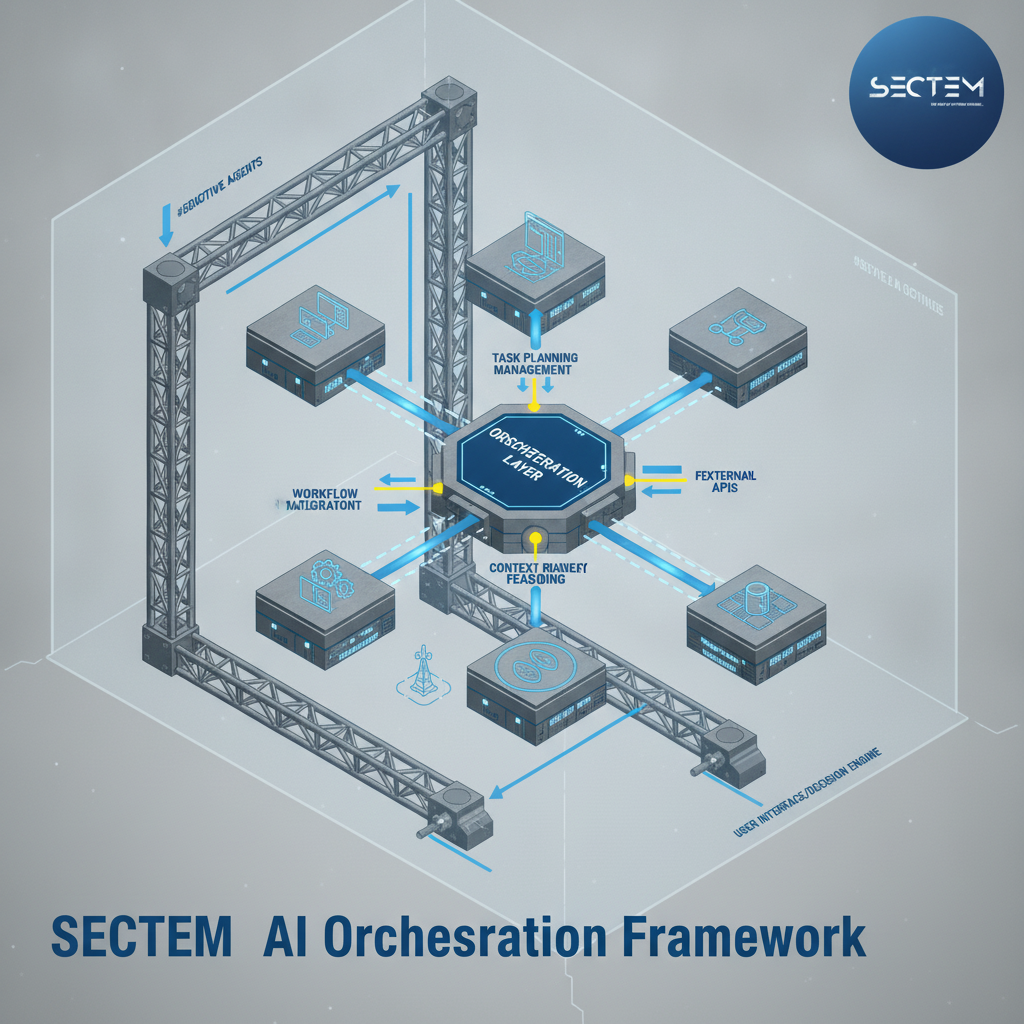
For founders in the SaaS sector, agentic systems offer a way to eliminate engineering bottlenecks. Instead of building manual workflows for every new feature, the infrastructure is designed to handle new tasks through the reconfiguration of existing agents. This accelerates time-to-market and ensures that the product remains competitive in a rapidly changing environment. The structural integrity of an agentic system is measured by its ability to execute complex tasks with minimal error and maximum efficiency.
Scaling With Structural Integrity And LLM Operations
As an AI-driven product grows, the complexity of managing large language models (LLMs) increases exponentially. This is the domain of LLMOps, a critical subset of Product Engineering focused on the lifecycle management of AI models. Without a rigorous approach to LLMOps, the structural integrity of the growth engine will eventually fail. This involves continuous monitoring of model performance, automated retraining pipelines, and robust version control to ensure that the AI components of the product remain reliable over time.
The challenges of scaling AI products are particularly acute for companies expanding across North America and Europe. Regulatory requirements such as GDPR and the AI Act in Europe necessitate a responsible and transparent approach to AI engineering. A Master Architect ensures that these requirements are baked into the foundation of the product, rather than being treated as an afterthought. This proactive approach to compliance is a key component of Architectural Integrity, allowing the brand to operate with absolute certainty in any market.
Furthermore, scaling requires a focus on cost-efficiency. AI operations can quickly become prohibitively expensive if not managed correctly. Through intelligent resource allocation and the use of smaller, specialized models where appropriate, Product Engineering can optimize the performance-to-cost ratio. This ensures that the growth remains sustainable and that the revenue generated by the autonomous systems is not consumed by the infrastructure required to run them. The focus must always be on the long-term structural health of the asset.
The Intersection Of Growth Architecture And Data Intelligence
Growth Architecture is the strategic design of the entire technical ecosystem to facilitate rapid and sustainable expansion. At its core is Data Intelligence—the ability to extract meaningful insights from vast amounts of information and use those insights to drive action. In a high-performance digital product, these two elements are inseparable. The architecture provides the structure, while the intelligence provides the direction. This synergy is what enables a company to move from manual growth to autonomous dominance.
For a COO in the logistics sector, Data Intelligence might mean the ability to predict supply chain disruptions before they occur and automatically re-route shipments. For a Fintech CTO, it might mean the ability to identify subtle patterns of market volatility and adjust risk parameters in real-time. In both cases, the value is derived from the precision of the engineering. When the growth architecture is designed with an intelligence-first mindset, the organization gains a competitive advantage that is difficult for others to replicate.
Transitioning to this model requires a departure from traditional development practices. It requires a focus on the mechanical integrity of the outcome and a commitment to building systems that are capable of autonomous operation. This is the mission of the Master Architect: to secure the future of the brand by constructing a technical foundation that is resilient, intelligent, and entirely focused on growth. The result is a digital asset that operates with the precision of a finely tuned machine, converting data into revenue with absolute certainty.
Frequently Asked Questions
What is the difference between traditional automation and AI-driven autonomous growth?
Traditional automation follows pre-defined, linear rules to perform repetitive tasks. AI-driven autonomous growth utilizes agentic systems and data intelligence to make decisions and adapt to new information, allowing for the execution of complex workflows without manual oversight. It is the difference between a simple script and a self-optimizing engine.
How does Product Engineering address technical debt in AI systems?
Product Engineering addresses technical debt by prioritizing architectural integrity from the outset. This involves building modular, scalable data pipelines, implementing rigorous LLMOps for model management, and ensuring that all AI components are integrated into a unified growth architecture. This prevents the accumulation of fragile, ad-hoc solutions that slow down development cycles.
Why is RevOps integration critical for Series A through C companies?
For companies in these stages, RevOps integration is critical because it aligns the technical product with revenue-generating activities. By unifying fragmented data into a singular intelligence stream, organizations can automate the customer acquisition cycle, improve forecasting accuracy, and ensure that engineering efforts are directly contributing to the bottom line.
How do you ensure the structural integrity of an AI product during global expansion?
Ensuring structural integrity during global expansion involves designing the architecture to handle increased load and diverse regulatory requirements. This includes implementing robust monitoring systems, optimizing model performance for cost and latency, and ensuring that data handling practices comply with regional laws like GDPR. A focus on precision and high-level oversight is essential.
What role does Data Intelligence play in revenue forecasting?
Data Intelligence unifies fragmented data from across the organization to provide a clear, real-time view of business performance. By applying predictive analytics to this unified data stream, AI systems can identify trends and forecast revenue with high accuracy, allowing leadership to make informed decisions and allocate resources more effectively.
Conclusion
The era of manual growth is concluding. For global brands in the SaaS, Fintech, and Logistics sectors, the future belongs to those who can architect high-performance digital products that operate with autonomy. This transition requires more than just a change in tools; it requires a fundamental shift in how we approach Product Engineering. By focusing on architectural integrity, autonomous growth, and intelligence-first engineering, organizations can build the foundational technology necessary for market dominance.
As a Master Architect, the goal is always the structural integrity of the outcome. Whether it is through the implementation of agentic systems, the integration of AI-driven RevOps, or the optimization of LLM operations, every decision must serve the mechanical integrity of growth. When the architecture is sound, the results are inevitable. Sectem is dedicated to this vision, building the technical foundations that allow enterprises to operate with absolute certainty. The world is watching; ensure your growth is engineered to last.