
Introduction
In the current landscape of high-growth SaaS, Fintech, and Logistics, the primary barrier to sustainable scaling is not a lack of demand but the presence of operational friction. This friction acts as a parasitic load on the growth engine, manifesting as technical debt, fragmented data, and manual bottlenecks in customer-facing processes. To achieve market dominance in North America and Europe, Series A through C organizations must move beyond superficial support patches and focus on Product Engineering as the core of their operational strategy. This approach treats customer operations as a mechanical system that requires architectural integrity and precision-engineered automation.
At Sectem, we define high-performance digital infrastructure as a system where every interaction is optimized for speed, accuracy, and conversion. When customer operations are plagued by manual lead qualification, inconsistent support responses, or data silos, the structural integrity of the entire business model is compromised. The solution lies in the strategic application of AI Automation and a robust RevOps framework. By architecting an intelligence-first environment, founders and CTOs can transform reactive support centers into proactive revenue drivers. This article examines the structural necessity of removing friction through advanced engineering and autonomous growth principles.
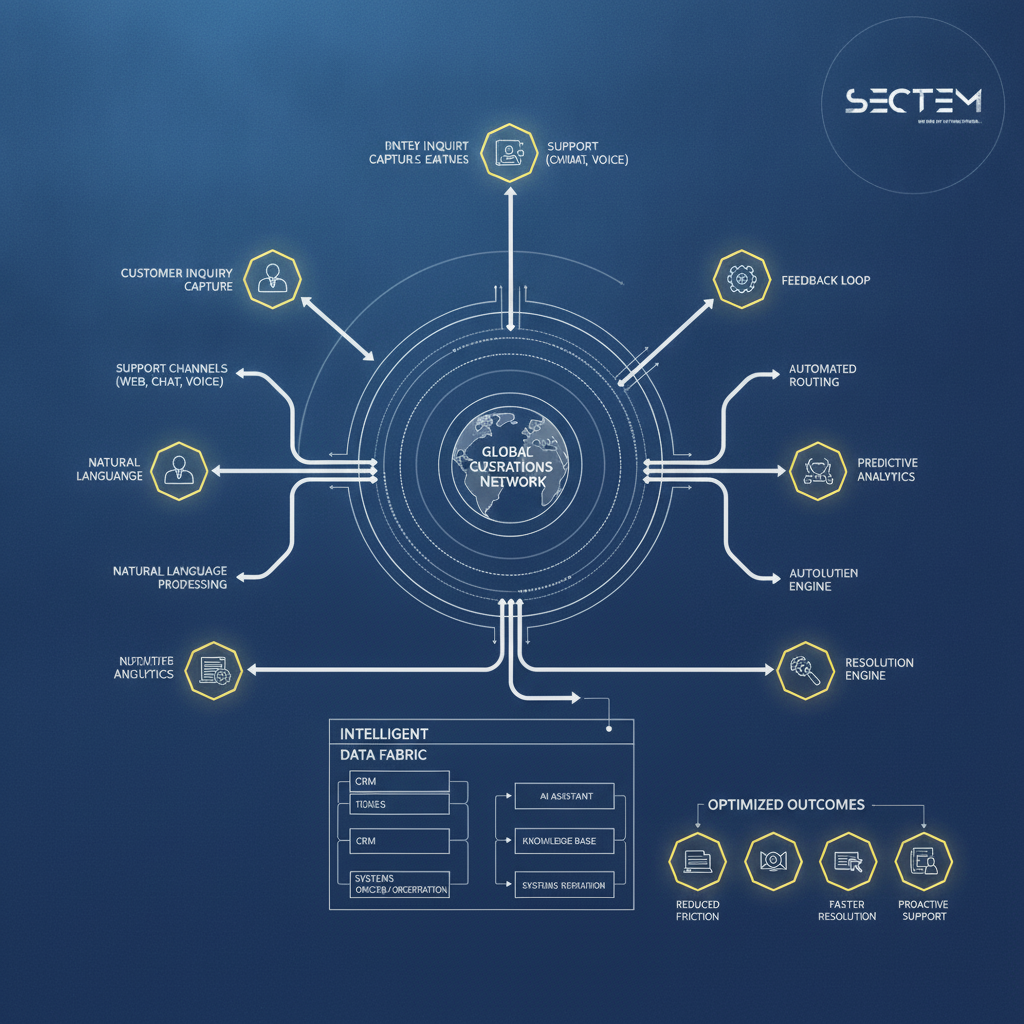
The Structural Decay Of Manual Customer Operations
Manual processes are inherently non-scalable. In the context of customer operations, reliance on human intervention for repetitive tasks such as lead routing, basic query resolution, and data entry leads to inevitable entropy. For a CTO or COO managing a rapidly expanding portfolio in the Fintech or Logistics sectors, these manual touchpoints represent points of failure. Every minute a customer waits for a response is a minute of friction that increases churn probability. This is not merely a service issue; it is a mechanical failure of the growth architecture.
When customer operations rely on manual oversight, data becomes fragmented. Information captured during a support call often fails to reach the sales team or the product development queue, creating a lack of data intelligence. This fragmentation prevents accurate revenue forecasting and slows down the feedback loop required for rapid product iteration. To maintain architectural integrity, an organization must eliminate these manual friction points. The goal is to create a seamless flow where information moves autonomously across departments, ensuring that the customer journey is uninterrupted by internal inefficiencies.
The cost of this decay is particularly visible during global expansion. Managing diverse time zones and languages in the United States, United Kingdom, and Germany using traditional call center models is prohibitively expensive and difficult to maintain. The resulting inconsistency in service quality damages the brand equity. By shifting toward an intelligence-first engineering model, organizations can replace these fragile manual structures with resilient, automated systems that operate with absolute certainty, regardless of scale or geographic distribution.
Product Engineering As The Foundation For Frictionless Interaction
The concept of Product Engineering extends far beyond the initial build phase of a software application. In the Sectem philosophy, it encompasses the ongoing optimization of the entire technical ecosystem to support aggressive revenue targets. For customer operations, this means building support and engagement tools directly into the product architecture rather than treating them as external add-ons. When the product itself is engineered to anticipate user needs and resolve common friction points, the need for high-touch support is drastically reduced.
High-performance Product Engineering involves the implementation of self-healing systems and proactive diagnostic tools. For example, in a complex Logistics platform, a structural failure in a delivery route should be identified and communicated to the customer by an automated intelligence layer before the customer even realizes there is a delay. This transformation from reactive to proactive operation is the hallmark of a mature growth architecture. It removes the friction of the unknown, providing the customer with a sense of security and reliability that manual teams cannot match.
Furthermore, Product Engineering allows for the integration of sophisticated AI Automation at the API level. This ensures that customer data is not just stored but is actively utilized to drive automated workflows. Whether it is personalized onboarding paths or automated credit limit adjustments in Fintech, the underlying engineering must be robust enough to handle these tasks autonomously. This structural integrity ensures that the system remains stable even as the volume of transactions and user interactions grows exponentially.
AI Automation In High-Stakes Lead Qualification
Lead qualification is often the most significant friction point in the customer acquisition cycle. For SaaS and Fintech companies, the delay between a lead expressing interest and a human representative reaching out can be fatal to the conversion rate. AI Automation provides a mechanical solution to this problem by implementing intelligent qualification engines that operate in real-time. These systems use natural language processing and data intelligence to evaluate the quality of a lead based on pre-defined architectural parameters.
By automating the initial qualification phase, organizations ensure that their high-value sales teams focus exclusively on prospects with the highest propensity to convert. This is a critical component of Revenue Operations. It eliminates the manual labor of sorting through unqualified inquiries and ensures that the sales funnel is constantly fed with high-yield opportunities. In the North American and European markets, where competition is fierce, the speed of this qualification process is a decisive competitive advantage.
The intelligence-first engineering approach to lead qualification also allows for deep personalization. The AI does not just qualify; it categorizes and prepares a data-rich profile for the sales team, reducing the friction of the transition from automated interaction to human negotiation. This level of precision is what defines a Master Architect approach to growth. It is about creating a system where every component is optimized for the highest possible structural output, ensuring that no potential revenue is lost to operational lag.
Revenue Operations: Unifying The Intelligence Stream
Revenue Operations, or RevOps, is the discipline of aligning sales, marketing, and customer success through data and technology. In a friction-heavy environment, these departments often operate as silos, each with its own data set and priorities. This lack of alignment is a direct threat to autonomous growth. To fix this, Sectem architects a unified intelligence stream that serves as the single source of truth for the entire organization. This is where Product Engineering meets business strategy.
A unified RevOps engine eliminates the friction caused by data discrepancies. When the marketing team sees the same customer health metrics as the support team, the organization can respond to market shifts with mechanical precision. For instance, if data intelligence identifies a recurring friction point in the customer onboarding process for a Fintech app, the RevOps framework allows for an immediate shift in resources to address the underlying architectural flaw. This rapid response is only possible when the data stream is unified and automated.
Furthermore, RevOps provides the structural integrity needed to forecast revenue with accuracy. By automating the collection and analysis of customer lifecycle data, COOs can make informed decisions about market expansion and resource allocation. This removes the friction of uncertainty, allowing the organization to operate with market dominance. The goal is a system where growth is not a series of lucky breaks but the inevitable result of a well-engineered revenue engine.
Reducing Latency In Global Fintech And Logistics Operations
In the Logistics and Fintech sectors, latency is the ultimate friction. A delay in payment processing or a lag in supply chain visibility can have catastrophic consequences for the end-user. Reducing this latency requires a deep commitment to high-performance Product Engineering. It involves optimizing server-side logic, implementing edge computing, and utilizing AI Automation to handle real-time data processing. For global brands, this architectural integrity is the difference between certainty and chaos.
In Logistics, AI-driven automation can manage back-office operations such as customs documentation and route optimization without manual intervention. This reduces the friction of international shipping, allowing for faster delivery times and lower operational costs. In Fintech, automated fraud detection and compliance checks ensure that transactions are processed securely and instantly. These are not just operational improvements; they are structural necessities for any company looking to scale in the European or North American markets.
By removing the human element from these high-latency tasks, organizations achieve a level of operational precision that is impossible to reach through manual oversight. The result is a frictionless experience for the customer and a highly efficient back-office for the brand. This intelligence-first approach ensures that the digital infrastructure can support the heavy load of global commerce without buckling under the pressure of technical debt or manual friction.
Managed Teams And The Integration Of Autonomous Growth
While AI Automation handles the bulk of repetitive tasks, there is still a need for managed teams to oversee the most complex aspects of customer operations. However, in an intelligence-first organization, these teams operate differently. They are not manual laborers but system overseers who work in tandem with the automated infrastructure. This is the essence of autonomous growth: a system where human intelligence is leveraged to optimize the mechanical integrity of the automation.
Managed teams, such as virtual assistants or specialized support squads, must be integrated into the RevOps framework. They should have access to the same data intelligence as the automated systems, allowing them to provide high-level architectural oversight. For a Series B founder, this means that the support team is not just answering phones; they are analyzing patterns of friction and providing feedback to the Product Engineering team. This creates a continuous loop of improvement that strengthens the overall growth architecture.
This integrated approach also helps in managing service quality across different regions. By combining automated triage with high-level managed support, a brand can ensure a consistent experience in France, Germany, and the United States. The automation handles the friction of volume and language, while the managed teams handle the friction of complexity. This balance is critical for maintaining market dominance and ensuring that the brand values of architectural integrity and precision are upheld at every touchpoint.
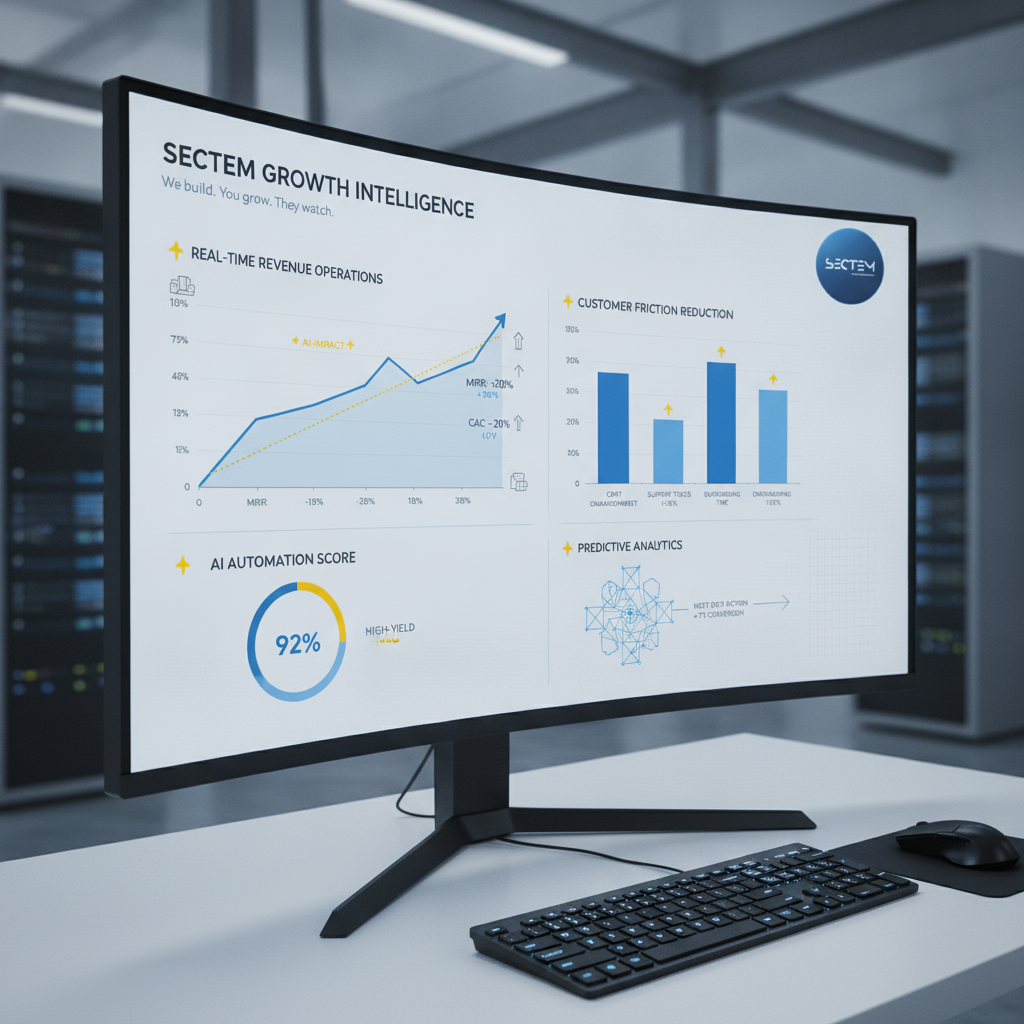
Frequently Asked Questions
How does Product Engineering specifically reduce customer churn?
Product Engineering reduces churn by identifying and eliminating technical friction points within the user journey. By building proactive diagnostic tools and automated support triggers directly into the software architecture, the system can resolve issues before they negatively impact the user experience. This structural integrity creates a more reliable product, which directly correlates with higher customer retention rates.
What is the role of AI Automation in Revenue Operations?
AI Automation serves as the mechanical engine of Revenue Operations. It automates data collection, lead qualification, and customer segmentation, ensuring that sales and marketing teams have access to real-time, actionable data intelligence. This eliminates the manual friction of data entry and analysis, allowing the organization to focus on high-yield growth activities.
Can AI Automation replace traditional call centers?
AI Automation does not necessarily replace humans but re-architects the call center model. It handles the high-volume, repetitive queries that cause operational bottlenecks, allowing human agents to focus on complex, high-stakes interactions. This intelligence-first approach increases efficiency, reduces operational costs, and improves the overall quality of customer operations.
Why is data intelligence important for global expansion?
Data intelligence is crucial for global expansion because it provides the insights needed to navigate diverse markets with certainty. It allows organizations to track regional performance, identify local friction points, and automate compliance and localization tasks. This ensures that the growth architecture is resilient enough to handle the complexities of North American and European market dynamics.
What are the first steps to implementing a friction-free growth architecture?
The first step is a thorough audit of the existing technical infrastructure to identify silos and manual bottlenecks. Once these friction points are mapped, the organization must prioritize the integration of a unified RevOps framework and the deployment of AI Automation for high-impact tasks like lead qualification and back-office operations. This transition requires a commitment to architectural integrity and intelligence-first engineering.
Conclusion
Reducing customer friction is not a matter of increasing headcount or improving soft skills; it is a mechanical challenge that requires an architectural solution. For founders, CTOs, and COOs of high-growth organizations, the path to market dominance lies in the strategic integration of Product Engineering and AI Automation. By treating customer operations as a core component of the digital infrastructure, brands can eliminate the structural decay caused by manual processes and data silos. This approach ensures that every interaction is a step toward autonomous growth rather than a source of operational drag.
The implementation of a robust RevOps engine and a unified intelligence stream provides the structural integrity necessary to scale aggressively in global markets. As we have explored, the transition to an intelligence-first engineering model allows for the automation of complex tasks in Fintech and Logistics, reducing latency and maximizing ROI. At Sectem, we believe that the future belongs to those who build with precision. By architecting high-performance digital products and automating growth through data intelligence, you secure the future of your brand. We build. You grow. They watch.