Introduction
The global fintech landscape is currently undergoing a structural transformation that demands more than simple software updates. For Series A through C founders and executive leaders, the transition from a standard software delivery model to a robust Product Engineering framework is no longer a matter of preference but a requirement for survival. In the high-stakes environments of North America and Europe, where regulatory scrutiny and market competition are equally intense, the ability to architect systems that are both resilient and intelligent defines the boundary between market dominance and obsolescence. This article examines the mechanics of utilizing artificial intelligence to rebuild the financial engine, ensuring that every line of code contributes directly to revenue velocity and structural integrity.
At Sectem, we view the fintech stack not as a collection of features, but as a complex blueprint where every component must support the weight of aggressive growth. Product Engineering in this context involves the integration of advanced AI automation and data intelligence into the core architecture of the platform. This approach eliminates the traditional friction between the development team and the revenue operations team, creating a unified growth architecture. By focusing on the structural integrity of the digital product, firms can move away from manual oversight and toward autonomous operations that scale without the proportional increase in technical debt. The following sections provide a technical analysis of how to achieve this transition effectively.
The Mechanics Of Product Engineering In Modern Fintech
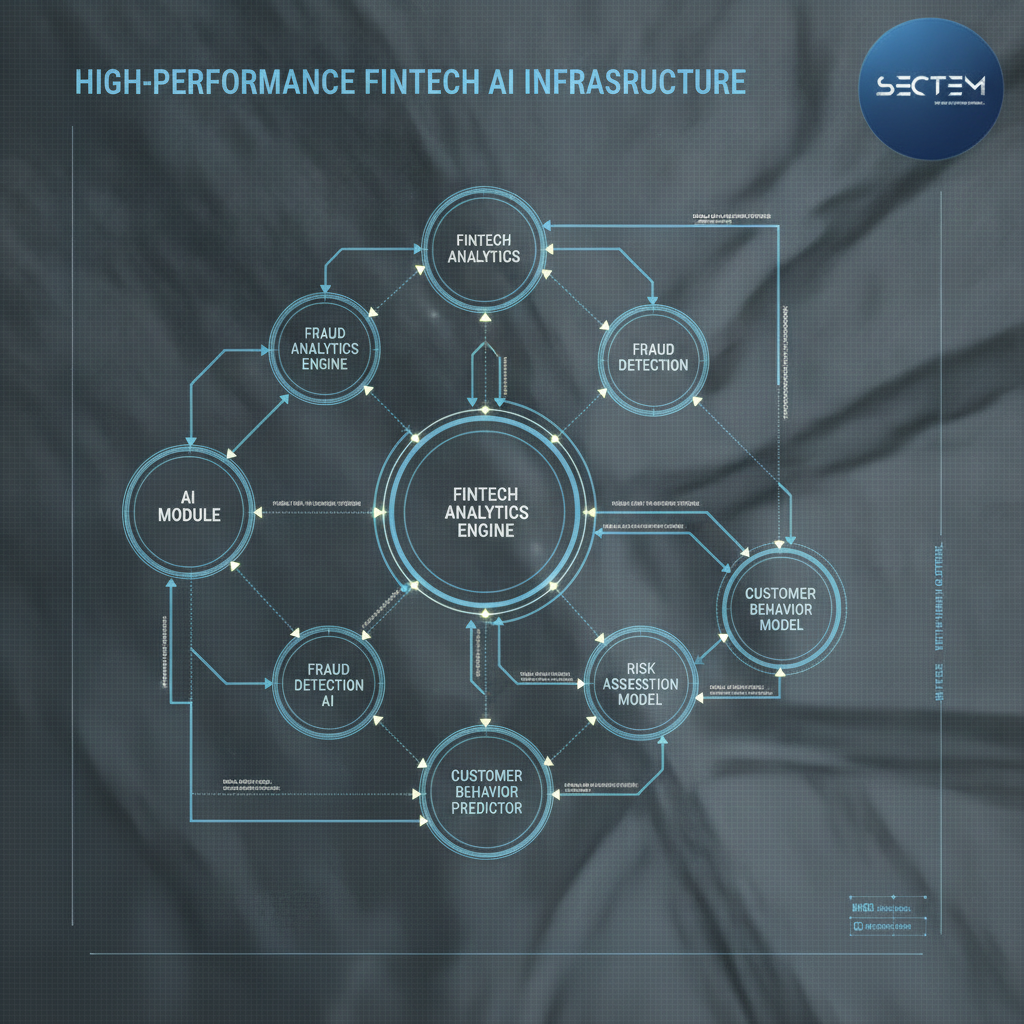
Product Engineering transcends traditional software development by prioritizing the long-term viability and revenue-generating capacity of a digital asset. In the fintech sector, this means building systems that can handle high-frequency transactions while simultaneously processing complex datasets for real-time insights. The structural integrity of such a system depends on its ability to adapt to shifting market conditions without requiring a complete overhaul of the codebase. This is where intelligence-first engineering becomes critical. By embedding AI directly into the architectural layer, firms can ensure that their products are not just functional, but capable of autonomous evolution.
For a CTO or COO, the primary challenge is often the accumulation of technical debt that slows down critical growth cycles. Traditional architectures often rely on siloed data structures that require manual intervention for reconciliation and reporting. Product Engineering solves this by creating a singular intelligence stream where data flows seamlessly between the core product and the revenue operations engine. This integration allows for the automation of repetitive tasks, such as risk assessment and compliance monitoring, freeing up engineering resources to focus on high-impact innovation. The result is a leaner, more efficient organization that can respond to market demands with surgical precision.
Integrating AI Automation Into The Revenue Stack
Revenue Operations, or RevOps, is frequently misunderstood as a purely administrative or sales-focused function. However, in an intelligence-first organization, RevOps is an engineering discipline. It is the process of building a mechanical system that converts technical performance into financial growth. AI automation plays a pivotal role here by providing the predictive capabilities necessary for accurate revenue forecasting and churn mitigation. By deploying agentic systems that monitor customer behavior in real-time, fintech firms can identify expansion opportunities and friction points before they impact the bottom line.
The implementation of AI automation within the revenue stack requires a deep understanding of data intelligence. It is not enough to simply collect data; the architecture must be capable of processing it into actionable insights. This involves the use of sophisticated Large Language Model operations (LLM Ops) and Retrieval-Augmented Generation (RAG) to provide contextual intelligence to both internal teams and external users. When the revenue engine is powered by the same high-performance architecture as the product itself, the entire enterprise operates with a level of certainty that is unattainable through manual processes alone.
Data Intelligence As The Foundation Of Growth Architecture
Data is the raw material of the fintech industry, but without proper structural integrity, it remains a liability rather than an asset. Data silos are the primary cause of friction in the customer acquisition cycle and the leading obstacle to accurate forecasting. To overcome this, the growth architecture must be designed to unify fragmented data into a singular, cohesive stream. This process involves the orchestration of complex data pipelines that feed into centralized intelligence hubs, where AI models can analyze patterns and predict outcomes with high degrees of accuracy.
In the North American and European markets, where data privacy and security are paramount, the architecture must also account for regulatory compliance as a foundational element. This means that data intelligence systems must be built with responsible AI principles at their core. By automating the governance and oversight of data flows, fintech firms can ensure that they remain compliant while still leveraging the full power of their information assets. This level of architectural foresight is what allows global brands to operate with market dominance, knowing that their technical foundation is secure and scalable.
Agentic Systems And Autonomous Product Operations
The future of fintech lies in the transition from manual oversight to autonomous product operations. Agentic systems represent the next phase of this evolution, where AI agents are capable of making complex decisions and executing tasks within predefined architectural boundaries. In a fintech context, this might include autonomous voice agents for customer support, or conversational AI that can guide users through complex financial transactions. These systems do not replace human intelligence; rather, they augment it by handling the mechanical load of high-volume operations.
Building these agentic systems requires a rigorous focus on Product Engineering. The agents must be integrated into the core infrastructure in a way that ensures they have access to real-time data while maintaining the security and stability of the platform. This involves the use of agentic frameworks that can coordinate multiple AI models to achieve a specific business objective. For a founder or executive, the goal is to create a self-sustaining ecosystem where the product grows and optimizes itself based on the intelligence it gathers from its environment. This is the essence of autonomous growth.
Mitigating Technical Debt Through Intelligence-First Engineering
Technical debt is the hidden tax on innovation. For high-growth fintechs, it is often the result of prioritizing short-term features over long-term structural integrity. Intelligence-first engineering addresses this by treating AI as a core component of the architectural blueprint rather than an afterthought. By utilizing AI to automate the testing, deployment, and monitoring of code, engineering teams can identify and resolve bottlenecks before they become systemic issues. This proactive approach to maintenance ensures that the technical foundation remains robust even as the product scales.
Furthermore, AI-driven Product Engineering allows for the continuous optimization of the system’s performance. Machine learning models can analyze the efficiency of various architectural components and suggest improvements that reduce latency and improve throughput. This level of technical oversight is essential for fintechs operating in the logistics and SaaS sectors, where performance inconsistencies can lead to significant revenue loss. By investing in a high-performance digital infrastructure today, firms can avoid the costly and disruptive migrations that are often required to address legacy technical debt in the future.
Architecting For Global Expansion And Market Dominance
Expanding into new global markets requires a technical architecture that is both flexible and localized. The regulatory environments of the United States, United Kingdom, and the European Union are distinct, yet a unified product vision must be maintained across all regions. Product Engineering provides the framework for this localization by creating modular systems that can adapt to regional requirements without compromising the integrity of the global core. AI automation can be used to manage the complexities of cross-border transactions, tax compliance, and currency fluctuations, providing a seamless experience for the end-user.
The ultimate goal of any high-performance architecture is market dominance. This is achieved not just through superior features, but through the absolute certainty that the system will perform under pressure. When the growth architecture is designed to support aggressive revenue targets, the enterprise can focus entirely on expansion. The Master Architect approach ensures that every decision made during the engineering process is aligned with the long-term vision of the brand. In the world of fintech, where the stakes are high and the margin for error is low, structural integrity is the only sustainable competitive advantage.
Frequently Asked Questions
How does Product Engineering differ from standard software development?
Product Engineering focuses on the long-term structural integrity and revenue-generating potential of a digital asset. Unlike standard development, which may prioritize feature delivery, Product Engineering integrates AI automation and data intelligence into the core architecture to ensure scalability and minimize technical debt.
What role does AI automation play in Revenue Operations?
AI automation transforms RevOps from an administrative function into an engineering discipline. It provides predictive analytics for revenue forecasting, automates manual sales and marketing processes, and creates a unified intelligence stream that aligns technical performance with business growth.
How can AI help in reducing technical debt for fintech companies?
By utilizing intelligence-first engineering, companies can automate the identification and resolution of architectural bottlenecks. AI-driven testing and monitoring tools allow engineering teams to maintain high performance and stability without the manual overhead typically associated with legacy system maintenance.
Why is structural integrity important for fintech expansion into North America and Europe?
These markets have rigorous regulatory requirements and high competition. A product built with structural integrity ensures compliance, security, and consistent performance, which are essential for gaining market trust and achieving long-term dominance in sophisticated financial environments.
What are agentic systems and why should fintech leaders care about them?
Agentic systems are AI-driven frameworks capable of autonomous decision-making and execution. In fintech, they enable autonomous operations such as fraud detection and customer support, allowing firms to scale rapidly without a corresponding increase in operational costs or manual oversight.

Conclusion
The architectural integrity of a fintech platform is the primary determinant of its capacity for autonomous growth. By embracing Product Engineering and integrating AI automation at the foundational level, Series A through C founders can eliminate the bottlenecks that traditionally stifle innovation. The transition from manual, siloed processes to a unified growth architecture allows for a level of precision and efficiency that is required for global market dominance. In this high-stakes environment, the focus must remain entirely on the mechanical integrity of the outcome, ensuring that every technical decision serves the ultimate goal of revenue generation.
As the fintech sector continues to evolve, the demand for high-performance digital infrastructure will only increase. Firms that prioritize intelligence-first engineering today will be the ones that set the global standard for the future. At Sectem, our mission is to secure that future by architecting the foundational technology that allows enterprises to operate with absolute certainty. The blueprint for growth is clear: build with integrity, automate with intelligence, and scale with purpose. The market is watching; ensure your architecture is ready for the challenge.